Tennis Racquet Guide: Choosing the best weight for your game
This article is about Choosing. "A single wrong twist can turn a hobby into a chronic injury."
To protect your spine and joints during tennis, you must focus on rotational stability and proper equipment use to prevent long-term damage. This guide covers essential movement mechanics, gear selection, and injury prevention strategies to keep you on the court.
* Prioritize core stability to protect the lumbar spine during serves and groundstrokes. * Choose tennis-specific footwear to prevent lateral ankle injuries. * Select racquet weights that balance maneuverability with stability. * Implement dynamic stretching routines to prepare muscles for explosive movements.
Why does twisting cause back pain?
The sun hits the hard court at midday, and you prepare for a heavy cross-court forehand. As you pivot your hips and rotate your torso, a sharp sensation shoots through your lower back.
The primary cause of injury during tennis is the high-velocity rotation of the spine when the core is not properly engaged. When you swing a racquet, your body undergoes rapid torque, which places immense pressure on the intervertebral discs.
If your legs and hips are not absorbing the rotational force, the lumbar region becomes the primary pivot point, leading to strain or even disc herniation.
To mitigate this, players must learn to rotate through the hips and thoracic spine rather than just the lower back. Integrating core-strengthening exercises into a regular routine helps create a solid foundation that stabilizes the spine during explosive movements.
How should you choose a tennis racquet weight?
In the quiet sports shop, you lift a heavy racquet and feel a dull ache pull through your wrist.
Walking into a local sports shop, you find rows of heavy, professional-grade racquets that look intimidating. You pick one up, swing it once, and immediately feel the weight pulling on your wrist and elbow.
Selecting the right racquet involves finding a balance between power and control to prevent repetitive strain injuries. Beginners and intermediate players should look for an all-around racquet that offers maneuverability without sacrificing stability.
For most players, a weight between 280g and 300g is often considered the sweet spot for developing a proper swing path.
If the racquet is too heavy, it can lead to tennis elbow or shoulder impingement due to the sheer force required to move it. Conversely, a racquet that is too light might not provide enough stability when hitting heavy balls, causing the arm to absorb the vibration.
- Test the swing weight by performing several shadow swings to ensure the balance feels natural. 2. Check the grip size to ensure your wrist remains in a neutral position during contact. 3. Verify that the racquet head size provides a sufficient sweet spot for consistent contact.
When I first started playing at my local club, I tried using a heavy professional model, but I found myself pausing for a long time at the second stage of my backswing just to manage the weight.
Why are tennis shoes different from running shoes?
You stand at the baseline, looking down at your worn-out running shoes. You realize they feel bouncy and comfortable, but as you prepare for a sudden lateral sprint, you feel a lack of support on the sides of your feet.
The difference between running shoes and tennis shoes lies in the direction of movement. Running shoes are designed for linear, forward-motion support, whereas tennis shoes are engineered for multi-directional stability.
Because tennis involves constant lateral lunges, sudden stops, and quick changes in direction, the lateral reinforcement in tennis shoes is critical.
Using running shoes on a tennis court can lead to ankle rolls because they lack the necessary side-to-side support. Tennis-specific footwear features reinforced outsoles and higher lateral stability to prevent the foot from sliding over the edge of the shoe during a hard cut.
| Feature | Running Shoes | Tennis Shoes |
|---|---|---|
| Primary Motion | Forward/Linear | Multi-directional/Lateral |
| Side Support | Low | High |
| Sole Durability | Moderate | High (for court friction) |
How can you prevent common injuries?
The match is over, and you sit on the bench, feeling the stiffness settling into your knees and shoulders. You wonder if this soreness is just part of the game or a sign of something more serious.
Preventing injury requires a combination of proper technique, gradual progression, and thorough warm-up routines. Most injuries occur when a player attempts high-intensity movements without adequate muscle readiness or when they fatigue and lose their form.
A proper routine should include: 1. Dynamic stretching before the match to increase blood flow and joint mobility. 2. Consistent strength training to support the joints during impact. 3. Adequate recovery time between high-intensity sessions to prevent overuse.
It is important to note that these preventative measures do not apply if you are already experiencing an acute injury, in which case professional medical consultation is the only appropriate step.
What is the role of the core in injury prevention?
You stand at the service line, tossing the ball into the air. As you arch your back to prepare for the overhead strike, you feel your abdominal muscles tighten to hold your posture.
The core acts as the bridge between your lower body power and your upper body swing. A strong core allows you to transfer energy efficiently from your legs through your torso and into the racquet, reducing the workload on your extremities.
When the core is weak, the body compensates by overusing the shoulders and lower back to generate power.
Training the core to handle rotational loads is essential for any tennis player. This includes exercises that focus on anti-rotation and explosive rotational strength, such as planks, Russian twists, and medicine ball throws.
However, this does not apply in every situation.
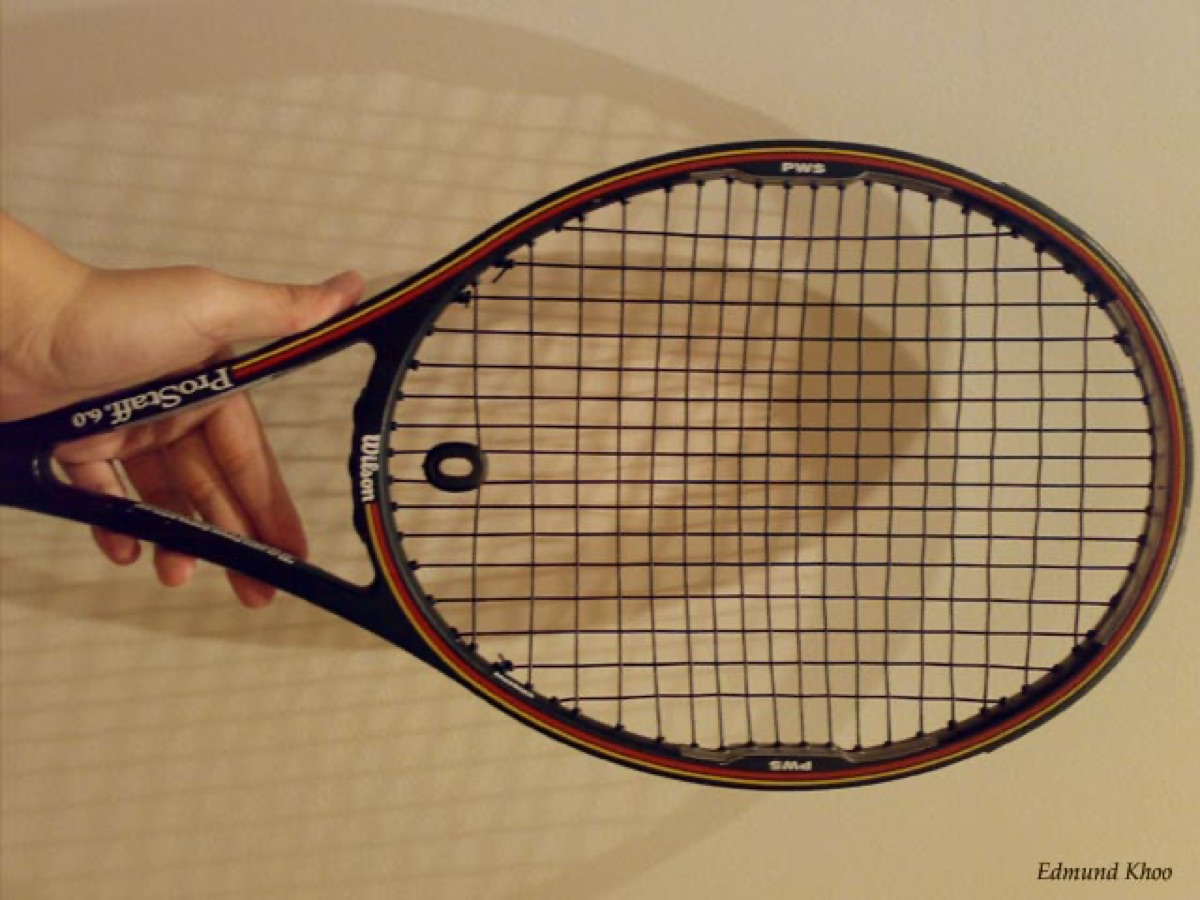
Beginners should look for an all-around racquet that is easy to maneuver and offers a decent amount of power. A weight between 280g and 300g is typically appropriate to allow for the development of a proper swing technique without causing undue strain.
Related

Comments 0